
Checking Knox County Criminal History
No single search produces every Knox County criminal record. Start with the Ninth Judicial Circuit's Knox County case route, which directs public users to Judici. A name, ticket number, or case number can locate a docket. The official sheriff roster page then covers current county custody through the Knox County Sheriff Illinois mobile app. The agency that investigated an event keeps the narrative report, and the Illinois State Police keeps the statewide criminal-history repository.
Prepare the full name, date of birth when known, spelling variants, and an estimated event date. A name match alone is not proof of identity. Compare the filing date, charge, court, and other public identifiers. If Judici shows only an index, use the first-floor public terminal or clerk counter for the filed record. Older booking material requires a focused sheriff request.
- Search Judici by name, ticket, or case number and select Knox County.
- Compare each possible match with known dates and case details.
- Check the sheriff app when current jail custody matters.
- Ask the investigating agency for its incident or arrest report.
- Use the clerk or Illinois State Police when an official copy or statewide result is needed.
Four Knox County Record Systems
A police report, jail booking, court file, and ISP transcript answer different questions. Police describe what was reported and what officers did. The jail records intake and release. The Circuit Clerk records the charge that prosecutors filed and the judge's outcome. ISP links reported arrest cycles with dispositions, though its ordinary public UCIA response is limited to convictions.
| Source | Best use | Key limit |
|---|---|---|
| Police or sheriff | Incident and arrest narrative | Not a court finding |
| Knox County Jail | Booking and current custody | Live roster is app-based |
| Circuit Clerk | Filed charge and disposition | Restricted files do not appear |
| ISP Bureau of Identification | Illinois repository history | Public UCIA is conviction-only |
Search more than one source when the result will be relied upon. A dismissal may remain visible in a court or arrest record even when it is absent from a public conviction response.
Illinois Official Background Checks
The Illinois State Police Bureau of Identification maintains the central repository. Its Criminal History Information Response Process, or CHIRP, accepts name-based UCIA conviction inquiries after registration and authentication. The electronic ISP charge is $10. A manual paper name inquiry costs $16. These public products disclose Illinois conviction information, not every arrest or police narrative.
Someone reviewing their own complete reported Illinois record should use Access and Review. Fingerprints may be taken at a law-enforcement facility or an Illinois-licensed Live Scan vendor. ISP charges no Access and Review fee, though the provider may charge. The returned package includes a Record Challenge form for disputed data.
| ISP product | Fee | Scope |
|---|---|---|
| CHIRP name inquiry | $10 | Public Illinois convictions |
| Paper name inquiry | $16 | Public Illinois convictions |
| Electronic fingerprint UCIA | $15 | Conviction product with stronger identity match |
| Access and Review | $0 ISP fee | Subject's broader reported Illinois transcript |
Knox Record Searches Through CHIRP
CHIRP uses a Transaction Control Number to track each inquiry. ISP compares a name through Soundex with sex, race, and date of birth. A Social Security number is not a primary match element. Alternate surnames require separate name searches, so former names should not be packed into one field.
| Field | Use | Rule |
|---|---|---|
| TCN | Tracks the request | Unique identifier |
| First and last name | Core name match | Required |
| Date of birth | Narrows candidates | Required |
| Sex and race | Match factors | Required |
| Return address | Response delivery | Complete address required |
The official CHIRP entry screen shows where registered users begin a conviction inquiry.
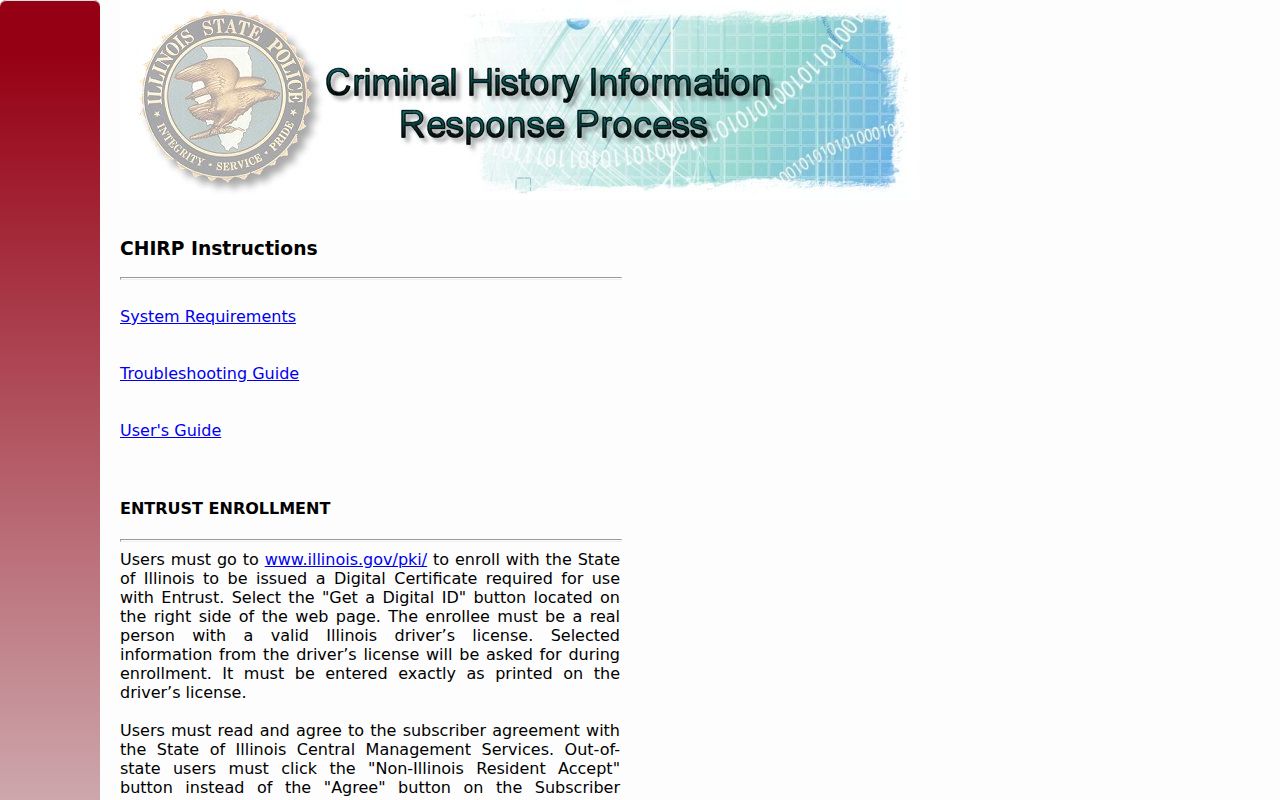
This captured interface belongs to the state repository, not the Knox Circuit Clerk or sheriff.
Criminal Record Types
Knox County records are divided by the event that created them. Incident reports contain allegations and officer work. Arrest and booking files document custody. Charging instruments and court dockets show what prosecutors filed, how each count moved, and the final disposition. ISP summaries assemble reported identity-linked events, while IDOC files cover state custody and mandatory supervised release.
Warrants are issued through the court and tracked by law enforcement. Probation records begin with the sentencing order, but detailed officer notes and treatment material are not presumed public. The state offender registry is a notification system, not a court file or a prediction of future conduct.
- Arrest and booking records: agency, intake, charge, custody, and release facts.
- Criminal court files: filed counts, hearings, orders, pleas, disposition, and sentence.
- ISP history: reported Illinois events linked through identity data.
- Warrants: court authority and law-enforcement status, sometimes reflected on a docket.
- Supervision and registry records: limited public facts held by courts, IDOC, PRB, and ISP.
Knox Courthouse Records Floor
The Knox County Courthouse at 200 South Cherry Street in Galesburg is the working court-record location. The first floor has the Circuit Clerk counter and a free public-access computer terminal. That floor also handles misdemeanors, traffic and ordinance cases, felony first appearances, preliminary hearings, and pretrial-release hearings. The second floor houses the Felony Clerk and Division One felony courtrooms.
Public hours listed by Illinois Courts are 8:30 a.m. to 4:30 p.m. weekdays. Call the Felony Clerk at 309-345-3836 for a felony file or the clerk at 309-345-3859 before seeking copies, since no current local copy-fee table was found. Visitors pass through screening, and phones and recording devices are prohibited without approval.
The Illinois Courts directory provides the courthouse listing shown here.
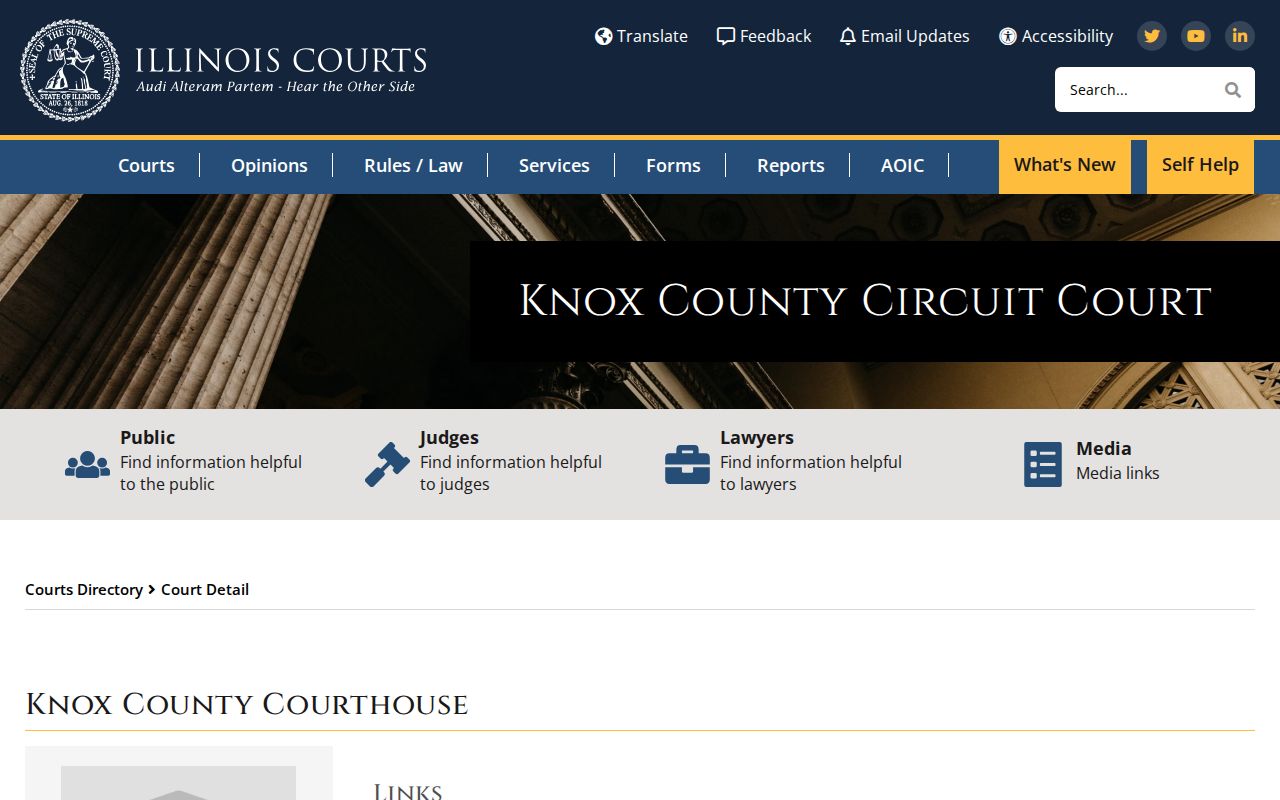
The directory confirms the current Galesburg courthouse, not the historic Knoxville building, as the public court destination.
Inside a Knox County Criminal Record
A Knox County court or repository result should be read field by field. Names and dates help distinguish people, but fingerprints give stronger identity assurance. Arrest charges describe the initial custody event. Filed counts show the prosecutor's action. A disposition records the result of each count, and the sentence records what the court ordered.
| Name & Identifiers | Aliases, date of birth, SID, fingerprint identifiers, or agency identifiers when reported. |
|---|---|
| Arrest / Booking Data | Arrest date, agency, initial charge, booking transaction, and custody facts. |
| Charges & Statutes | Officer allegations or the separate counts prosecutors filed in court. |
| Disposition | The count-level outcome, such as dismissal, acquittal, plea, or trial judgment. |
| Sentence | Custody, probation, conditional discharge, restitution, fines, costs, or jail credit. |
| Custody / Supervision Status | County jail, IDOC location, parole, MSR, or probation information when public. |
Knox Arrest Records Use an App
The official Knox County Sheriff roster webpage does not provide a desktop name form. It directs readers to the Knox County Sheriff Illinois mobile app. That makes the app the first official route for current county bookings, but it is not a historical arrest archive. Call the 24-hour sheriff line at 309-343-9151 if a recent booking is absent, then ask the arresting agency for its report.
The official Google Play listing documents the sheriff app and its public-safety tools. For released or transferred people, request a focused booking record from the sheriff at 152 South Kellogg Street. State-sentenced custody belongs in the IDOC locator.
Note: Jail staff do not discuss housing, medical treatment, discipline, or court dispositions with the general public.
Public Access Laws in Illinois
The Illinois Freedom of Information Act governs requests to local police and the sheriff, subject to exemptions and redaction. Section 2.15 addresses specified arrest facts. UCIA separately makes ISP-maintained conviction information public. Court access follows judicial rules, which restrict sealed, expunged, impounded, juvenile, and other confidential material.
Key Statutes:
5 ILCS 140 sets Illinois public-record request and exemption rules.
20 ILCS 2635 makes ISP conviction information available under UCIA.
20 ILCS 2630/5.2 governs expungement, sealing, exclusions, and access.
Remote Access Policy keeps restricted court material off public remote systems.
Knox Jail or Illinois Prison
County jail and state prison searches cannot be combined. The sheriff app covers current Knox County Jail custody. The IDOC Individual in Custody Search covers state custody and may show an IDOC number, parent institution, current location or status, admission and release dates, and sentencing information.
The official IDOC search screen illustrates the statewide layer.
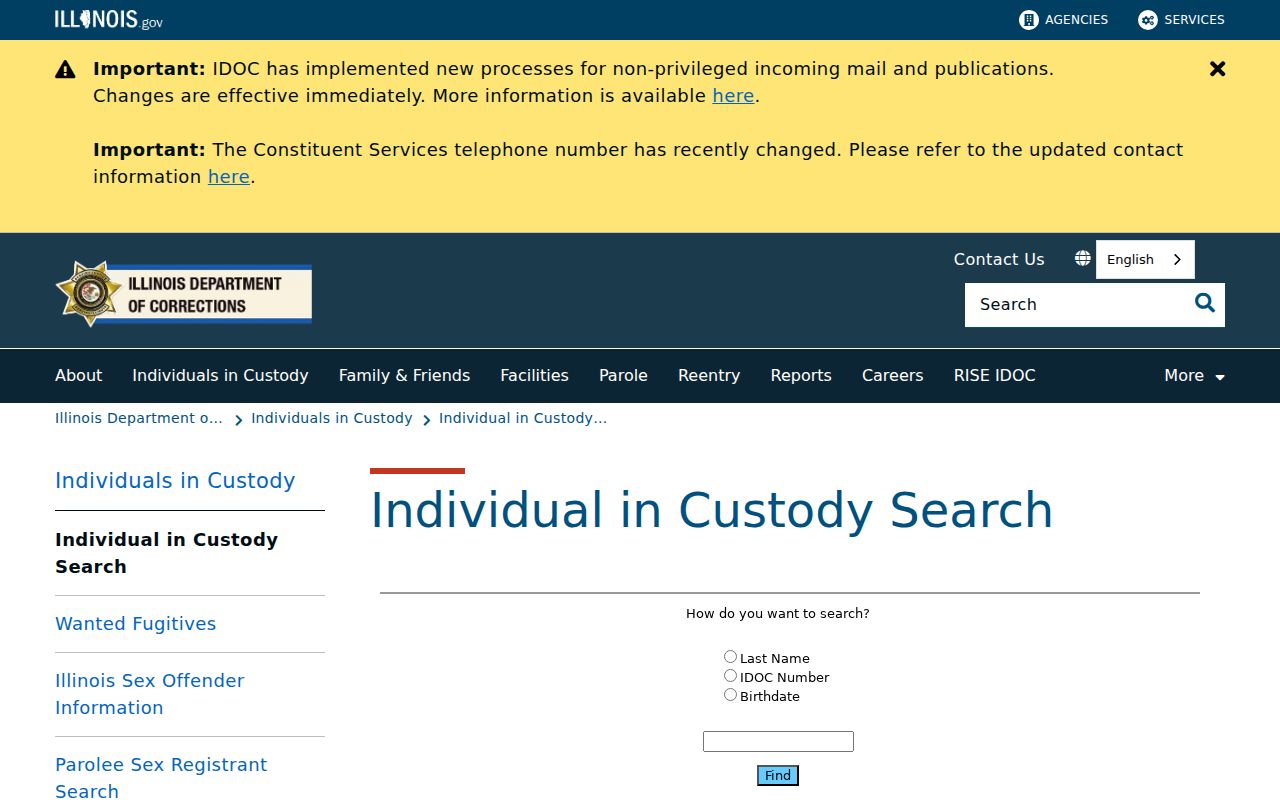
A person who has just been booked in Galesburg may not appear there. Check the county app first, then use IDOC after a state transfer.
Knox County Warrant Verification
No official public Knox County warrant database was found. Use the sheriff's 24-hour line, Judici for known case events, and the proper Circuit Clerk division. Traffic or ordinance failure-to-appear matters can go to the Traffic Clerk at 309-345-3870; recent felony matters can go to the Felony Clerk. A focused sheriff records request supplies another channel.
A docket may show that a warrant issued, was served, or was recalled, but not every active law-enforcement warrant appears at once. Sealed search warrants and juvenile matters can remain nonpublic. Anyone resolving their own warrant should confirm the case, current status, and appearance or surrender instructions. Do not assume that a payment or old recall entry has cleared every system.
Knox County Record Request Doors
The Illinois Freedom of Information Act does not create one Knox County records counter. Send the request to the office that made or keeps the document. The Circuit Clerk controls court files and certified court copies, so a county FOIA submission is not a substitute for the clerk's docket, terminal, or copy process. The Sheriff's Office holds sheriff-created incident, arrest, booking, and administrative records. Galesburg Police, Abingdon Police, and Knoxville Police remain the custodians of reports their own officers created.
No separate Knox sheriff records manager, dedicated records email, online request portal, downloadable form, or published copy-fee schedule was verified. The official fallback is sheriff administration at 152 South Kellogg Street in Galesburg, 309-345-3733, by personal visit, mail, or telephone. A focused request should identify the event date, time and place; the creating agency; report, booking, or warrant number when known; the record type and desired format; and whether a certified copy is needed. Those details are a practical request inventory, not fields from an official Knox form.
| Record sought | Knox County route | What to expect |
|---|---|---|
| Court docket or filed document | Circuit Clerk | Judici index, courthouse terminal, counter, phone, or mail |
| Sheriff arrest or booking file | Knox County Sheriff | In-person, mail, or phone request; unpublished fees and timing |
| City police incident report | Creating city department | City-specific clerk, form, portal, or confirmed local route |
| ISP-created report or repository entry | Illinois State Police | ISP FOIA, UCIA, or Access and Review based on record type |
FOIA access remains subject to lawful withholding and redaction. Active-investigation information, juvenile records, victim and witness identifiers, medical or security material, and private identifiers may be restricted. For an arrest record, Illinois law identifies a core set of facts for release, but it does not make every narrative, photograph, or internal jail field public. If an office redirects the request, confirm which agency created the record before sending it again.
Sealed, Expunged, and Restricted Records
Illinois expungement generally destroys or returns qualifying records and removes the name from public indexes as ordered. Sealing keeps the record but removes it from ordinary public inspection. Releases without charges, acquittals, dismissals, reversed convictions, and some completed supervision or qualified probation outcomes may qualify under 20 ILCS 2630/5.2.
The process starts with a verified petition in the circuit where the arrest or charge occurred. Notice then goes to the offices named by law. Local filing charges are separate, and ISP charges $60 to process a court order. After agencies process the order, the subject can use fingerprint Access and Review to confirm or challenge repository data.
- Expungement
- Removal and destruction or return of qualifying records as ordered.
- Sealing
- Continued retention with ordinary public access blocked.
- Immediate sealing
- Eligible records hidden without the ordinary waiting period.
- Disposition
- The court's result for a charge or count.
re:SearchIL Has Knox Limits
re:SearchIL is the Illinois Supreme Court statewide document repository. Free general-public access expanded in 2025 for described Supreme Court and appellate records, but the portal is not a complete statewide public search for Knox County circuit criminal cases. Judici, the Circuit Clerk, and the courthouse terminal remain the local trial-court routes.
The official re:SearchIL interface shows why its name can be misleading for a first-time Knox searcher.
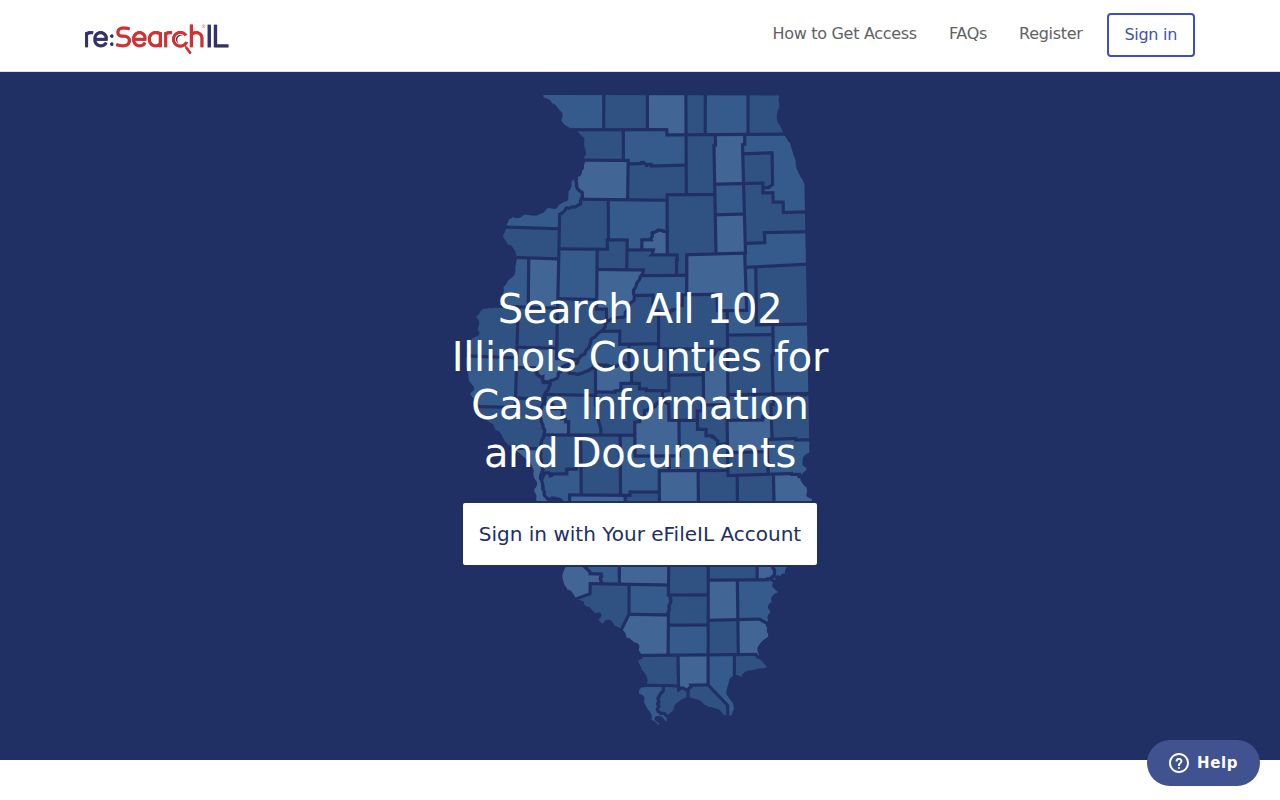
Use it for the reviewing-court layer, not as a replacement for the Knox Circuit Court docket.
Knox Records Reach Illinois Police
Illinois law requires policing bodies to report fingerprints and descriptions for covered felony and Class A or B misdemeanor arrests to ISP. Courts and criminal-justice agencies later report dispositions. ISP uses those reports to connect the outcome with the arrest cycle, but late dispositions, missing fingerprints, and false name matches can create gaps.
The Bureau of Identification overview is the official entry point shown below.
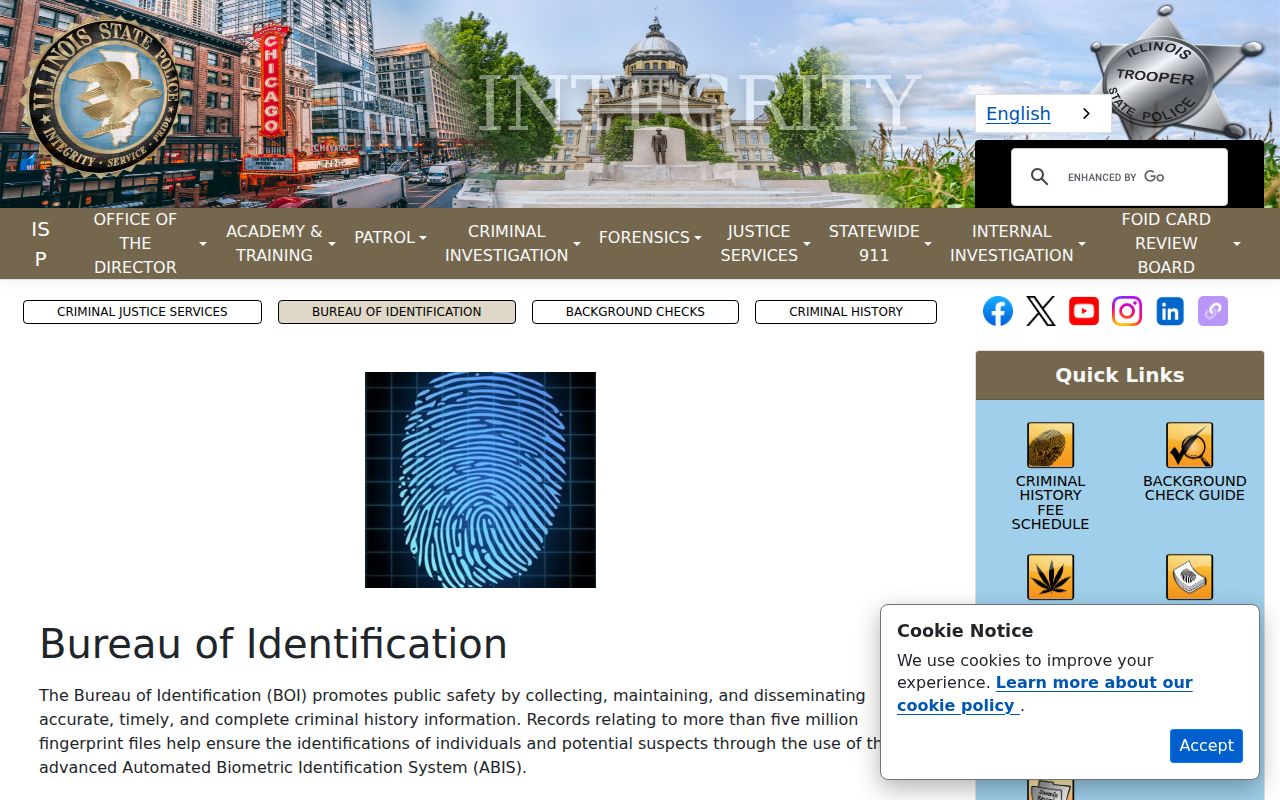
When the repository and court differ, compare the court disposition and use ISP's Record Challenge process instead of assuming either display is complete.
Knox County Criminal Records by City
Galesburg, Abingdon, and Knoxville are Knox County's three largest incorporated cities. Each city police department keeps the reports it creates, while bookings move to the county jail and judicial cases move to the unified Knox Circuit Court. None has a separate municipal criminal court. The local routes differ enough to warrant separate records pages.
Galesburg Criminal Records
2025 estimate: 28,581 · Police records route through the City Clerk and JustFOIA.
Abingdon Criminal Records
2020 Census: 2,951 · Focused written requests start with the City Clerk.
Knoxville Criminal Records
2020 Census: 2,901 · City Hall is the police-records request fallback.