
Sex Offender Checks in Knox County
The official starting point is the Illinois State Police Offender Registry. ISP updates it daily and provides both person-based and geographic tools. Select Knox in the county control to focus on local records, or begin with a known first and last name. The registry is the state source record. Knox County law enforcement handles local registration and is the right follow-up channel when an address, status, or verification entry appears wrong.
The official registry capture shows the public search environment used for Knox County checks.
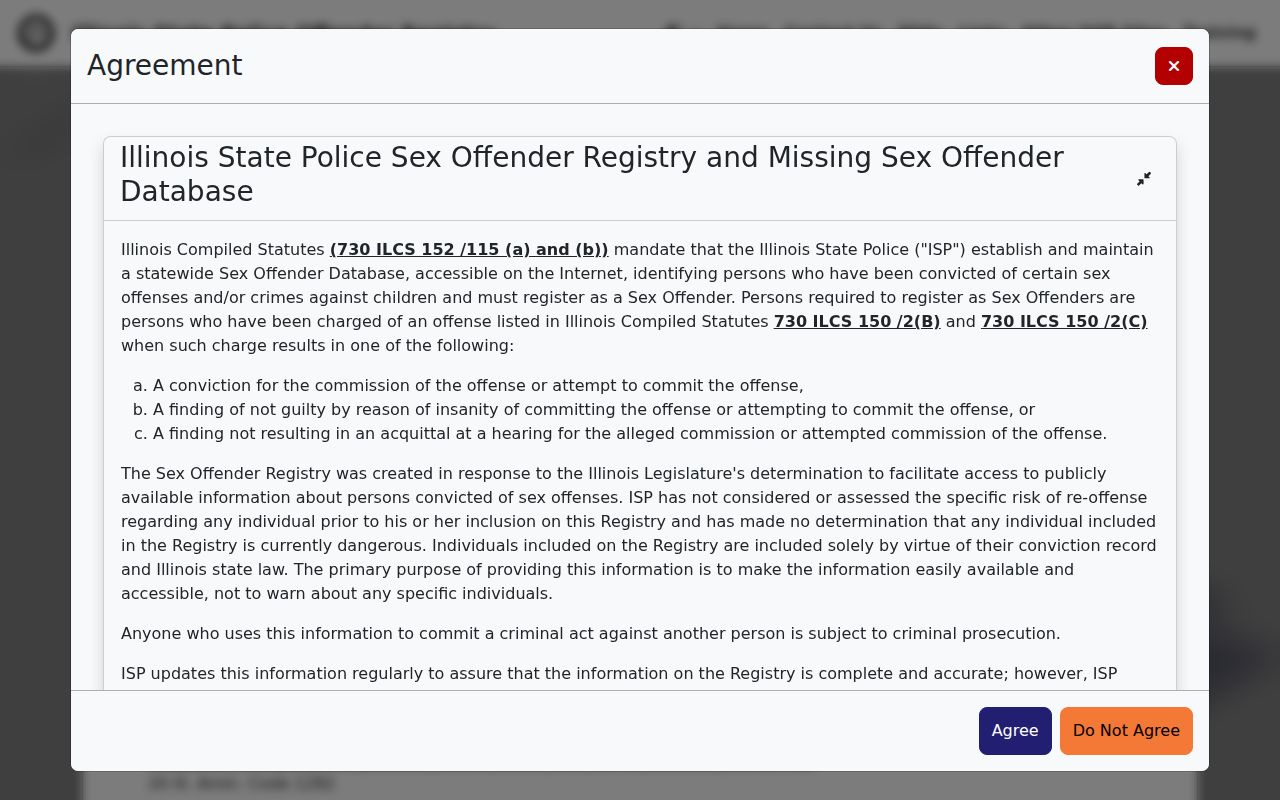
That page should be opened directly before relying on a copied list because the state data changes as agencies submit updates.
Narrow Knox County Registry Results
ISP advises beginning with first and last name, then adding identifiers. This approach reduces the chance that an old city, a spelling variation, or an overly tight filter hides a possible match. Date of birth can separate people with similar names. City and ZIP can narrow a long result set, while the county dropdown provides a direct Knox County view. Status, homeless, and offender-type controls answer different questions and should not be treated as identity fields.
Open Details only after comparing the result summary. A name alone is weak evidence. The photograph, age, physical description, aliases, and location fields help determine whether a profile concerns the intended person.
A useful second pass changes one control at a time. Remove the city before changing the spelling, or clear the status filter before assuming the profile is absent. This makes it easier to tell which condition excluded a Knox County registry result. Record the exact name and filters used when asking an agency to investigate a possible omission.
How to Search the Illinois Registry
The Illinois registry supports a simple sequence. Keep the first search broad and preserve the terms used if local law enforcement needs to review a possible error.
- Open the official ISP public registry.
- Enter first and last name, or choose Knox County.
- Add date of birth, city, ZIP, status, or type only as needed.
- Compare results, then select Details for the full public profile.
| Field | Type | Required | Use |
|---|---|---|---|
| First Name | Text | Unspecified | Use with last name for an initial person search |
| Last Name | Text | Unspecified | Primary name field |
| Date Of Birth | Date or text | Optional | Narrows similar names |
| City / Zip Code | Text | Optional | Limits place results |
| County | Dropdown | Optional | Select Knox, incarcerated, or out of state |
| Status / Homeless | Dropdown / checkbox | Optional | Filters compliance or reported housing status |
| Offender Type | Dropdown | Optional | Filters Illinois classification |
| Map Your Neighborhood | Map link | Optional | Searches an address or map point |
Map Knox County Neighborhood Results
Map Your Neighborhood answers a place-based question that a county list cannot. Enter an address or click a location, then select a yellow map marker to see its details. A county filter can show profiles categorized in Knox County, but the map helps a reader view the area around a specific point. Neither view should replace close profile review.
The National Sex Offender Public Website provides a useful second layer when a search crosses state lines.
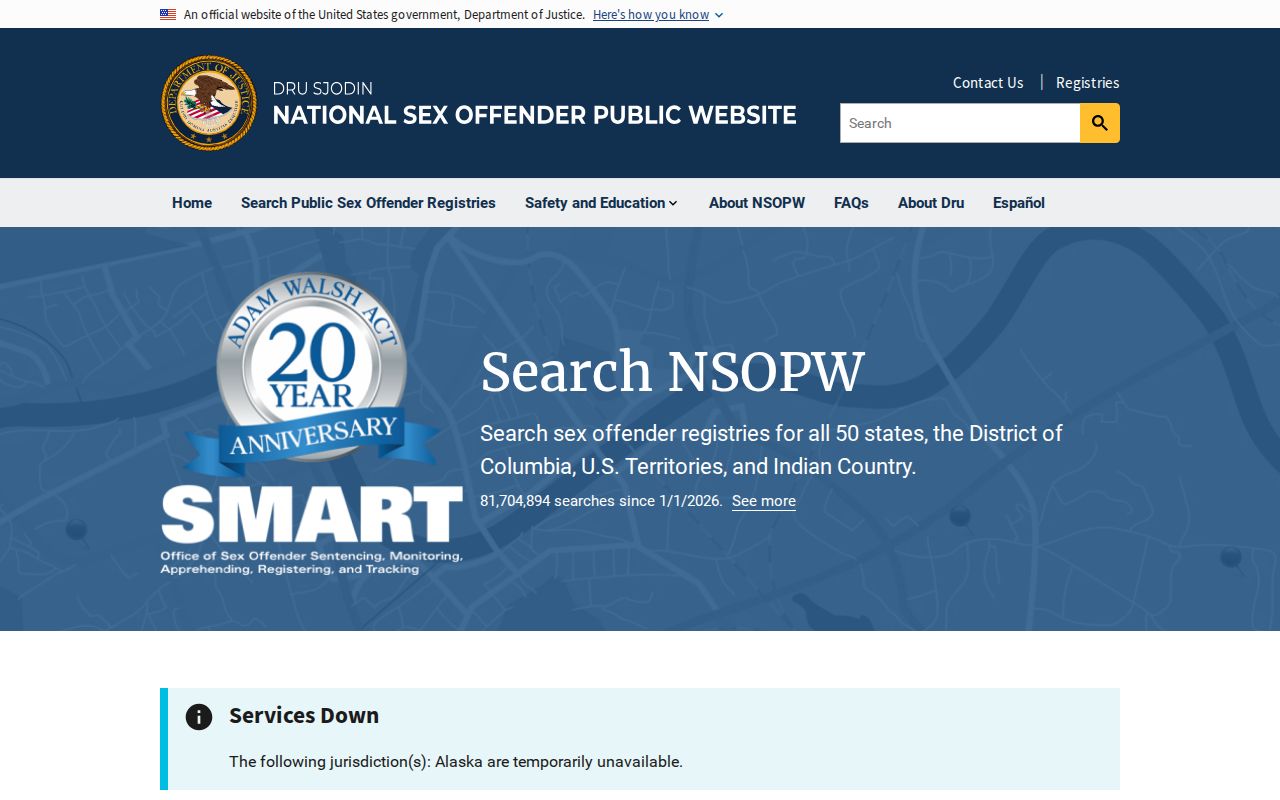
NSOPW combines participating jurisdictions, while the Illinois registry remains the source to consult for Illinois profile details and local reporting contacts.
Inside a Knox Registry Profile
A public profile groups identity, location, offense, and registration information. It may show a name and aliases, current photograph, date of birth or age, and physical traits. Address or location, county, registering agency, compliance status, and verification information describe the reported registration record. Offense descriptions and statutes connect the duty to a conviction or adjudication, but the underlying court pleadings and police narrative remain with their original custodians.
| Name and Aliases | Reported identity names used to compare possible matches. |
|---|---|
| Photo and Description | Photograph, sex, race, height, weight, hair, eyes, and distinguishing marks. |
| Registered Location | Public address or location, county, map marker, and registering agency. |
| Offense | Description, statute, conviction place and date, plus ages when public. |
| Classification | Illinois offender category and registration-period information. |
| Status | Compliance and last-verification information reported to the registry. |
| Vehicles | Vehicle and license-plate information when included in the public record. |
Registration-form copies come from the registering agency. Court documents come from the Knox County Circuit Clerk or State’s Attorney, and incident reports stay with the investigating agency.
Read Knox Profile Details Together
One field rarely tells the full story. An alias can explain a name mismatch. A vehicle or distinguishing mark may help confirm identity, while the verification date adds context to an address. Classification describes a legal category, not a risk score. Likewise, compliance status reports an administrative fact at a point in time; it does not predict future conduct.
If a result looks inconsistent, save the profile details and note the date checked. Do not try to settle the issue through direct contact with the listed person or household. The local agency where the person registers or resides can compare its record with the state entry.
Illinois Registration Levels and Requirements
Illinois does not present its public duration system as federal Tier I, II, and III. It uses statutory categories including sex offender, sexual predator, sexually dangerous person, and sexually violent person. Under 730 ILCS 150/7, some duties last ten years and others last for natural life. The start point can depend on conviction, adjudication, confinement, parole, discharge, or release.
| Illinois Category | Duration | Clock Rule |
|---|---|---|
| Sexually dangerous person released or discharged | Natural life | Lifetime duty after release or discharge |
| Sexually violent person | Natural life | After conviction, or after release if confined |
| Sexual predator | Natural life | After conviction, or after release if confined |
| Listed repeat-registration circumstances | Natural life | Applies as specified in Section 7 |
| Other person required to register | 10 years | From conviction or adjudication if not confined; otherwise from release |
| Failure to comply | 10-year extension | Begins with first registration after the violation |
Reconfinement tied to the original conviction can extend the period until ten years after final release. Unrelated reconfinement pauses the remaining ten-year period. A reporting gap does not prove that a duty ended lawfully.
The official duration-statute capture provides the legal text behind those clock rules.
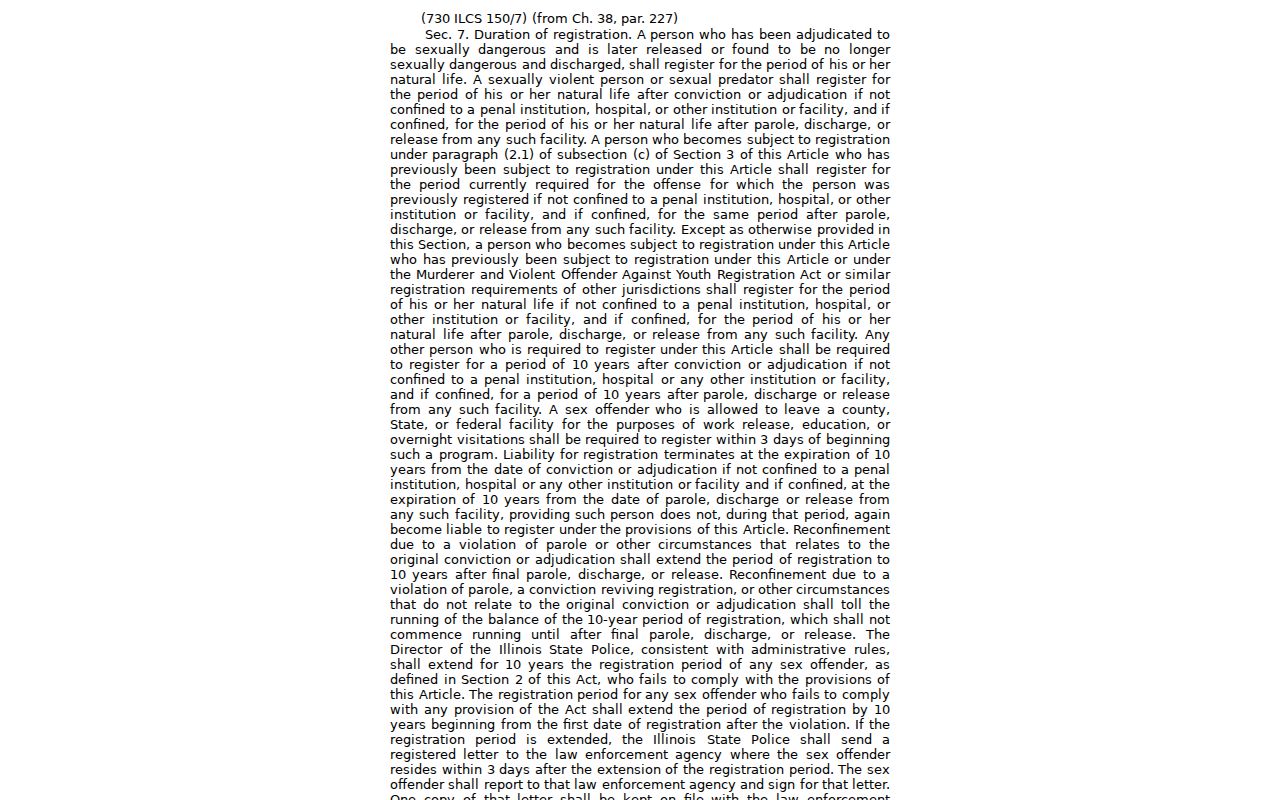
Readers should use the current statute and the agency record together because category and custody history can affect the end date.
Report Wrong Knox Registry Data
If an address or compliance status seems wrong, first recheck the name, profile identifiers, and verification information. Then contact the law-enforcement agency where the person registers or resides. That agency can review registration records and submit corrections through official channels. When no result appears despite credible information, ISP says to contact local law enforcement rather than assume that no registration exists.
Suspected noncompliance should also go to the local registering or residence agency. Immediate danger belongs with 911. The public should not investigate a home, confront anyone, or post unverified claims.
Bring the profile name, reported location, status, and date of the search to the agency. Explain the specific conflict rather than asking for a broad investigation. A registration-form question belongs with the registering office; a conviction-document question belongs with the Circuit Clerk or State’s Attorney. Keeping those requests separate helps each Knox County custodian answer from the record it actually maintains.
Knox Registry Records Beyond Profiles
The registry profile is not a complete case file. Illinois FOIA may provide access to public agency records, subject to exemptions, while registration forms remain with the registering agency and court files remain with the Circuit Clerk. The state’s FOIA guidance explains the public request framework.
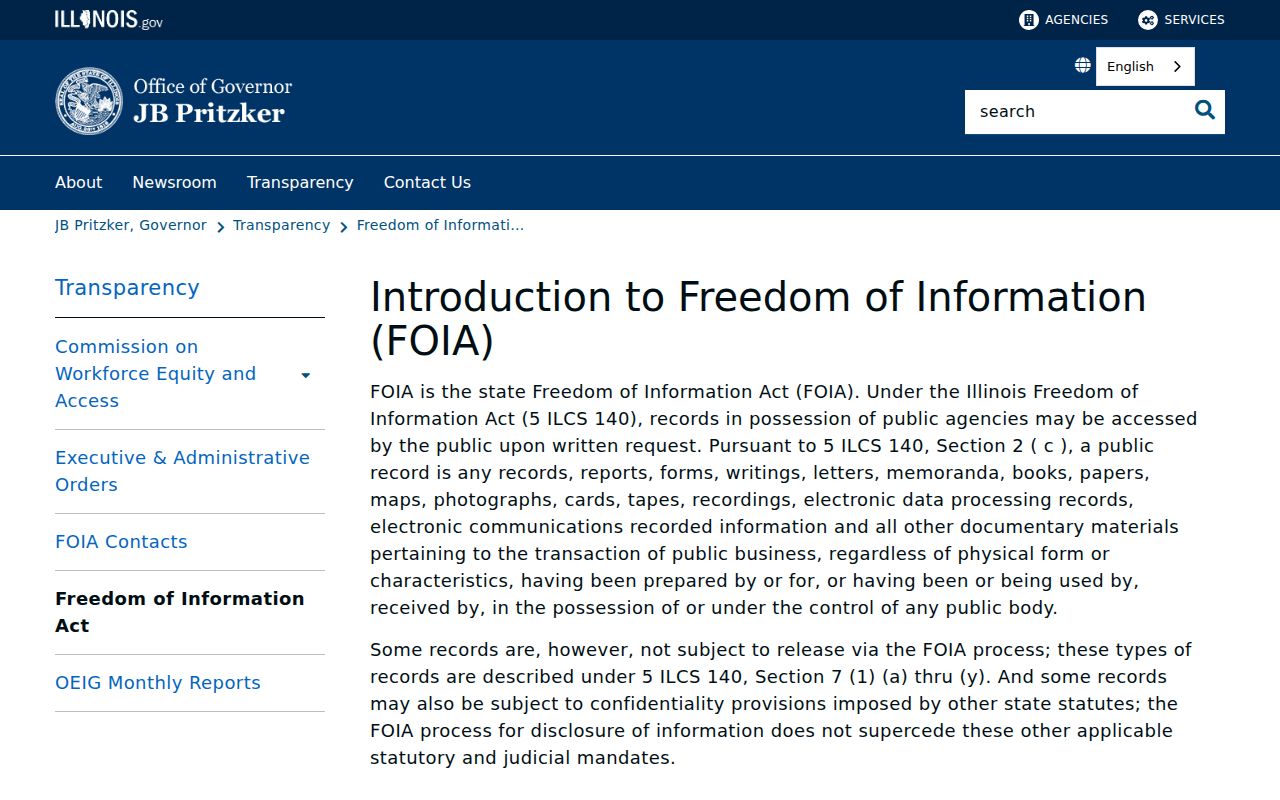
That framework helps direct a narrow request to the office that created the record instead of asking the registry for documents it does not host.
The text of the Illinois Freedom of Information Act supplies the governing rules.
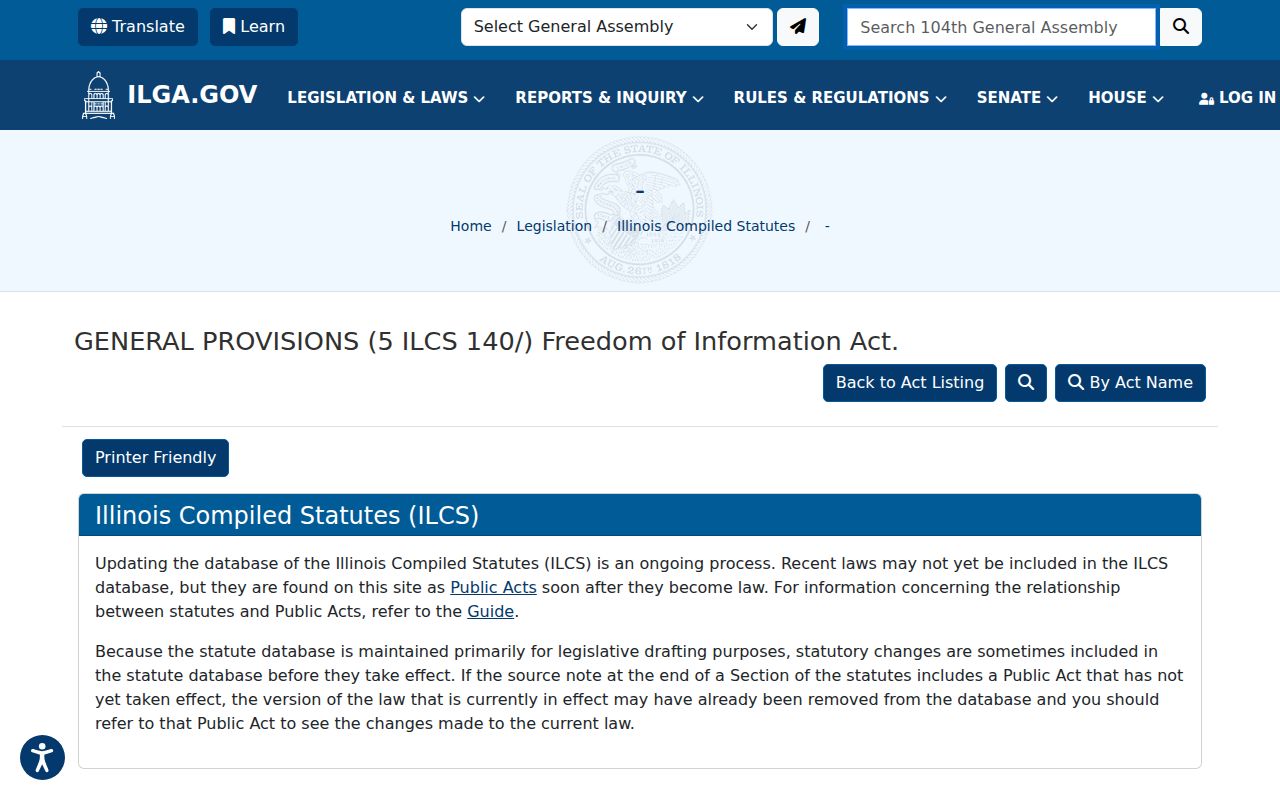
Exemptions and redactions can still apply, so a focused request should identify the document, agency, incident, date, and desired format.
Lawful Knox County Registry Use
Registry information supports community awareness and personal safety planning. Verify the profile, keep the record in context, and report suspected errors or noncompliance through law enforcement. A public listing does not authorize threats, surveillance, public shaming, or direct action. It also does not replace a court file when the goal is to understand the offense, judgment, or sentence.
Use registry data lawfully: Threatening, harassing, intimidating, or taking vigilante action against a registrant or household can be a crime. Report concerns to law enforcement.
Responsible use starts with accuracy. Confirm the person, read the full profile, and treat every status as a reported government record rather than a prediction.
Community notification works only when the information stays tied to its public-safety purpose. Share the official registry link when another person needs to check a result, rather than circulating a cropped image or an old copied list. The official profile gives the current context, and local law enforcement can address an urgent or credible concern.